Blog
Legal access vs physical access: why your solar parcel needs both
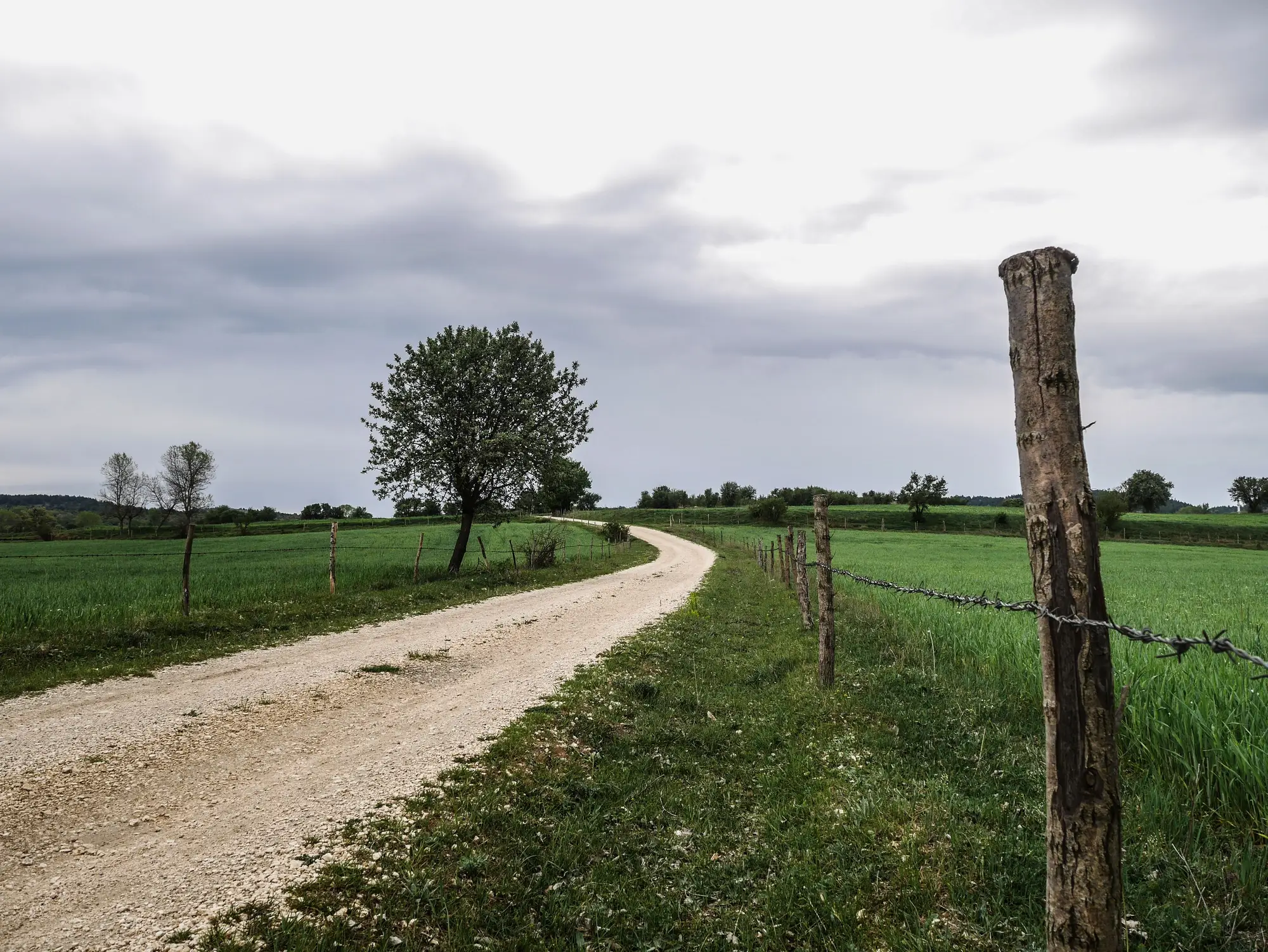
A parcel shows up on your shortlist with a nice rectangle of cleared, flat ground and decent irradiance. Then your title company flags a problem nobody mentioned on the call: the recorded easement runs through a neighbor's hay barn, or it dead-ends forty feet short of the county road. This happens often enough in land acquisition that it's worth separating the two things people lump together as "access."
Legal access: what's on paper
Legal access is a recorded right to cross someone else's land to reach yours. It usually shows up as an easement, a deeded right-of-way, or language in the chain of title that grants ingress and egress across an adjoining tract. Without it, you can own a parcel outright and still have no lawful way to drive onto it, because the land between your parcel and the public road belongs to someone else who hasn't given you permission to cross it.
A title search should catch this. So should a careful read of the plat. But easements get sloppy over time. Some were drawn by hand in the 1960s and describe a cart path that no longer lines up with any fence line on the ground.
Some were granted "for agricultural purposes only," language that gets interesting fast when you're trying to bring in a bucket truck and a string of construction trailers instead of a combine. An attorney doing title work needs to confirm the easement's language covers solar construction and O&M use, since a right drawn up for a hay wagon in 1962 doesn't automatically stretch to cover heavy equipment six decades later.
Physical access: what's on the ground
Physical access is simpler to picture and harder to verify from a desk. It's whether a truck can get from the public road to the parcel without crossing a bridge that can't carry the load, a creek with no culvert, or a private drive that a landowner three tracts over has every right to block the day the easement renewal comes up for negotiation.
Road frontage helps here. A parcel that touches a county road directly skips most of this problem. A landlocked parcel that depends on someone else's gravel lane for its only way in carries risk even with a clean legal easement, because gravel lanes wash out, gates get padlocked, and seasonal mud can shut down heavy equipment for weeks. None of that shows up in a title report. It shows up when a field tech drives out to look.
Why the gap between the two kills deals late
The expensive version of this problem is the one that surfaces after interconnection work has started, when an agent discovers the easement covers the wrong fifty feet, or the physical road to the site floods every spring and the construction schedule can't absorb that. Fixing it at that point means renegotiating with a landowner who now knows you need something from them, which is a worse position than finding the issue during early screening.
The cheap version is catching it before you've spent a field day on the parcel at all. Most teams already run a title pull and a windshield survey on every shortlisted site, which is the right instinct. The harder part is deciding which parcels in a list of a few hundred survivors deserve that time first, since legal and physical access issues are exactly the kind of thing that only shows up once someone drives out or pulls the chain of title, and you can't do that for every parcel on day one.
That's the gap a ranked shortlist is meant to close. Solar Site Ranking takes the parcels that already cleared physical screening and orders them by a composite of irradiance, grid distance, access, and constraint density, so the sites most worth a title pull and a drive-out rise to the top instead of getting buried in a spreadsheet sorted by acreage or county.
Two things can both be true of a parcel: the deed says you have a right to cross, and the road that right points to can't actually carry a crane. Checking only one of them is how a clean-looking site turns into a six-month delay.
If your shortlist has gone past the point where you can eyeball which parcels to check first, an ordered list is worth a look.