Blog
Three-phase vs single-phase lines: why it changes a parcel's grid-distance score
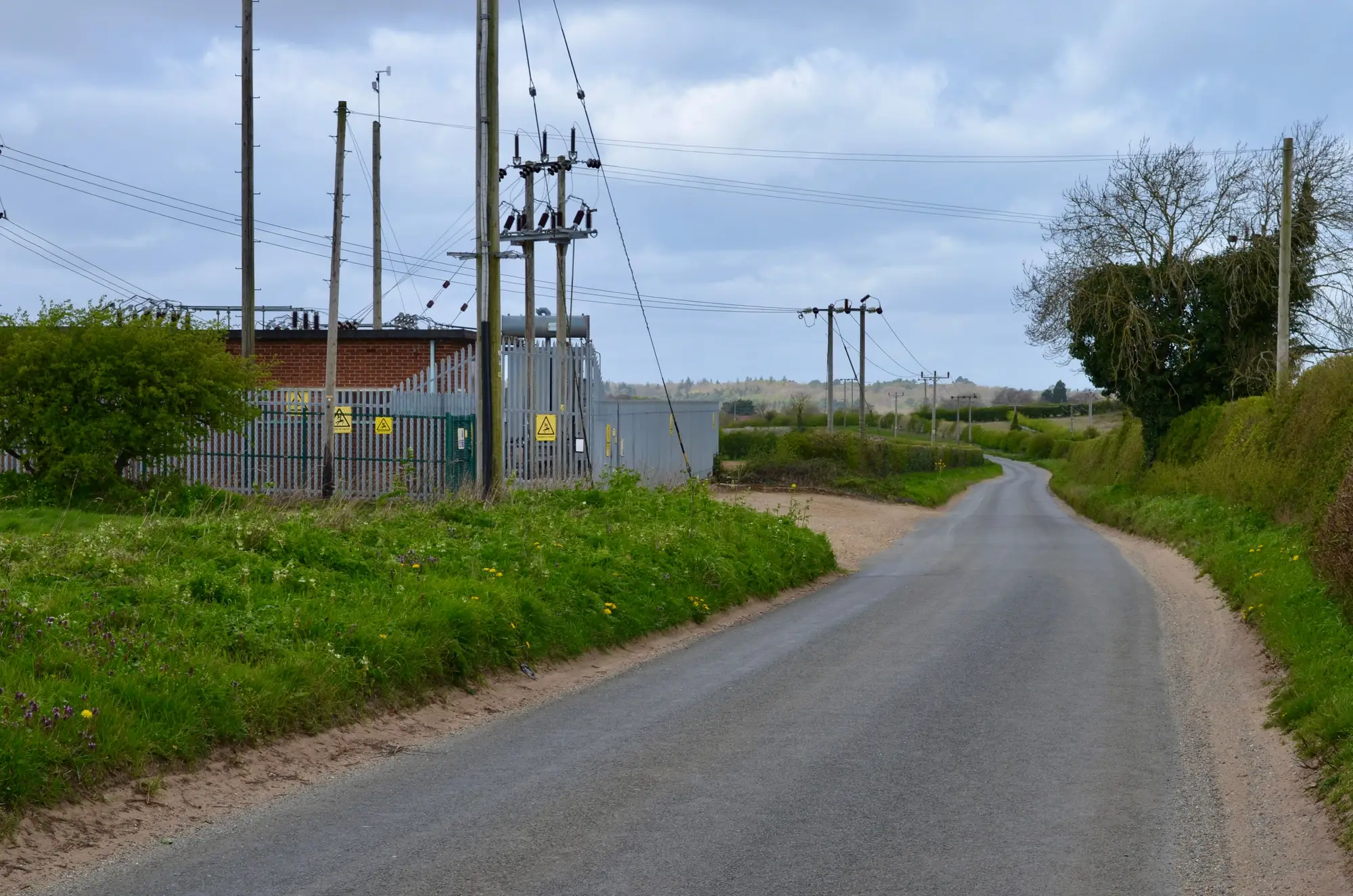
A parcel sitting 400 feet from a line looks like a slam dunk until you find out that line is single-phase. The real distance to interconnection is however far the nearest three-phase line runs, plus whatever it costs to get a utility to build one if there isn't one close enough to use.
This is the part of grid-distance scoring that trips up a lot of shortlists built off road-distance or line-distance alone. Two parcels can show the same "0.3 miles to grid" line item and have wildly different interconnection realities.
What single-phase and three-phase actually mean for a solar site
Single-phase lines are what runs power to houses and small farms. They carry one alternating current waveform and typically serve loads under maybe 25 kW, which is nowhere near what even a modest solar array pushes back onto the grid. Three-phase lines carry three offset waveforms on the same poles and are built to move real power in both directions at commercial scale. Utility interconnection standards for anything beyond a residential net-metered system generally require three-phase service, full stop.
So when a parcel's nearest conductor is single-phase, that line isn't really an interconnection point. It's a visual distraction on the imagery. The grid-distance number that matters is the distance to the nearest three-phase line, or to a substation, whichever gets you there first.
Why this changes a parcel's score, not just its footnote
A grid-distance score built on raw proximity to any line will rank a parcel next to a single-phase spur above a parcel a half mile from three-phase. That ranking is backward for anyone trying to interconnect. The first parcel either needs a phase upgrade or a run out to real three-phase infrastructure, and both of those show up as extra cost and extra calendar time before the second parcel's developer has even finished their interconnection application.
A single-phase to three-phase upgrade isn't a rounding error on a pro forma. The utility's make-ready work includes new conductor, new transformers sized for export, and in a lot of territories a full distribution study before they'll even quote it. None of that is cheap, and none of it is fast. It's exactly the kind of cost that doesn't show up until a developer has already spent weeks on a parcel, which is the whole reason it needs to be weighted into the ranking before the site visit, not discovered during due diligence after one.
Reading phase type off imagery before you drive out
Phase type is visible from overhead if you know what to look for. Three-phase distribution typically runs three conductors per pole (sometimes with a neutral making four), while single-phase runs on one or two. Transformer banks tell the same story: a single can on a pole is single-phase service, a cluster of three cans is three-phase. None of this requires a field visit to flag. It's exactly the kind of structural detail that separates a parcel worth a drive from one that's going to need a conversation with the utility first.
This is the gap between a spreadsheet of coordinates and a site-visit order built around what matters. A parcel list that scores every line the same, phase type included or not, is going to send a land agent to the wrong fence line first. Solar Site Ranking builds grid-distance into the composite score against the infrastructure a utility will actually let you interconnect to, which is the whole point of ranking a cleared shortlist into the order you should drive it in instead of guessing off a flat list.
If your shortlist still treats every nearby line the same, it's worth running it through a score that doesn't.